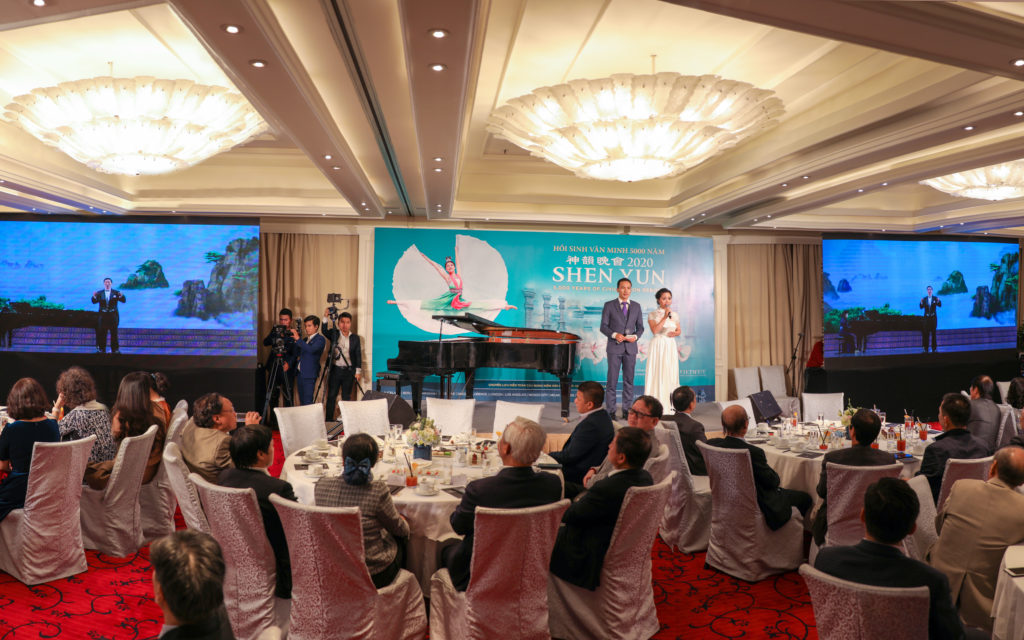

The cultural exchange tea party introducing Shen Yun Performing Arts in Tokyo has drawn to a close, yet the beauty of traditional art and the warmth of Vietnam–Japan friendship linger on, leaving a deep and lasting impression on all who attended. It was there that a reunion with Prof. Dr. Shine Toshihiko — a Japanese scholar of culture and science across many fields, former Cultural Attaché at the Embassy of Japan in Vietnam, and former Co-Director of the Office for International Cooperation between Vietnam National University, Hanoi and Kyoto University — unfolded the story of a long and steadfast journey: researching, preserving, and connecting the cultural heritage of two nations.
A Fateful Bond Between Two Scholars of Vietnam and Japan
Over the course of nearly a century, Vietnam has been ravaged by natural disasters and floods, and much of its cultural heritage has faded or been lost. As the country opened itself to the world and absorbed Western culture, and as traditional values struggled to withstand the passage of time, the preservation, study, and promotion of Vietnam’s cultural heritage became an urgent necessity. Some thirty years ago, Japanese foundations began working hand in hand with Vietnamese scholars on scientific research, on the conservation and use of cultural heritage, and on community initiatives. Some of these projects were pursued with quiet perseverance over many years — five, even ten — so that the very finest of the Vietnamese people’s traditional culture might be kept alive.
Among the experts who have stood steadfastly beside Vietnamese scholars from those early days to the present is Prof. Dr. Shine Toshihiko. He travelled the length of the country — North, Central, and South — reviewing the progress and quality of projects and joining in discussions to chart the most fruitful way forward. Over the years he has worked with a great many Vietnamese scholars, and among them is a close friend: Assoc. Prof. Dr. Nguyễn Công Việt, former Director of the Institute of Hán-Nôm Studies.
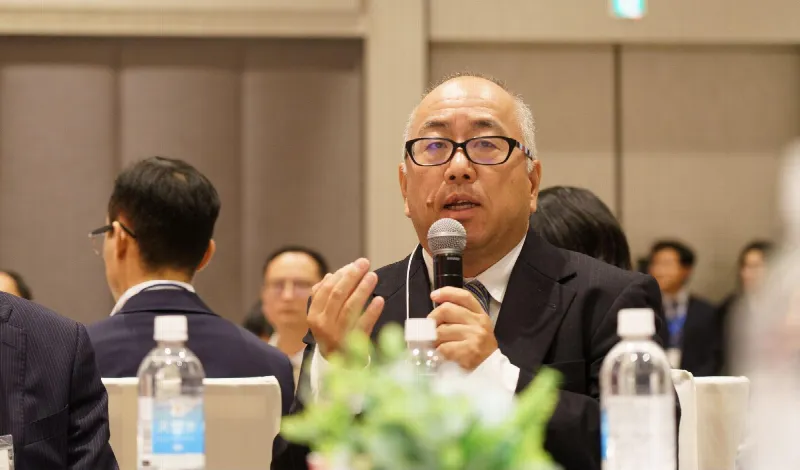
Prof. Dr. Shine Toshihiko delivers his remarks in both Japanese and Vietnamese. (Photo: VietMy Traditional Culture Co.)
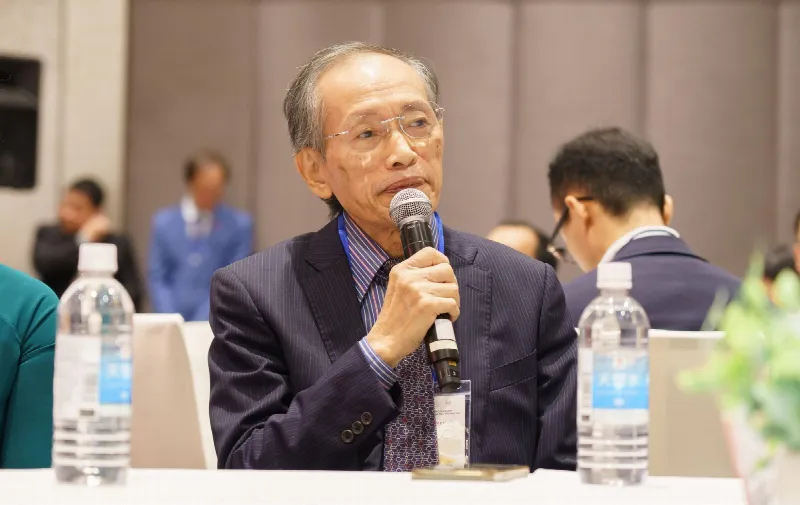
Assoc. Prof. Dr. Nguyễn Công Việt speaks at the event. (Photo: VietMy Traditional Culture Co.)
The two scholars worked side by side for more than five years on “Vietnamese Seals” (Ấn chương Việt Nam), the research work that laid the foundation for the study of seals in Vietnam.
This bond between two scholars united by their devotion to traditional culture brought them together once more at an event of special significance — the very first introductory program of Shen Yun Performing Arts ever held in Tokyo.
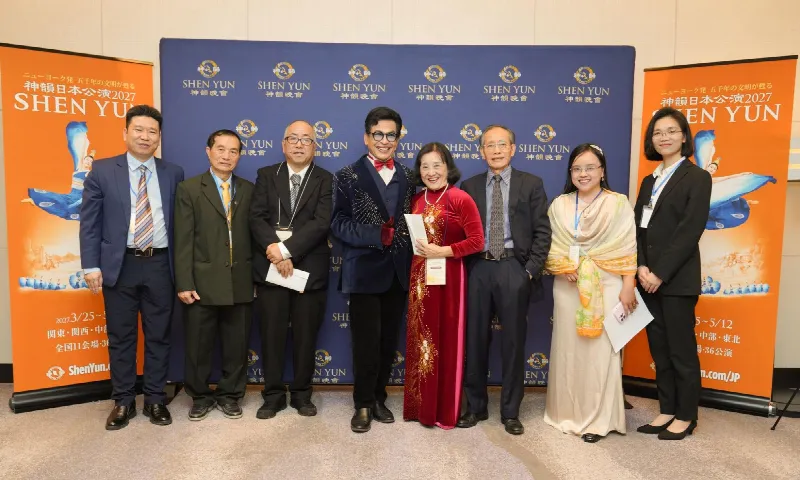
Prof. Dr. Shine Toshihiko among his Vietnamese friends. (Photo: VietMy Traditional Culture Co.)
A Memorable Address by Prof. Dr. Shine Toshihiko
Invited as a guest of honor, Prof. Dr. Shine Toshihiko shared the deep impressions that Shen Yun’s dance dramas had left on him. He observed that Kagura — a ceremonial dance of Japanese Shinto, performed by Shinto priests and miko (shrine maidens) at shrines and other sacred places as a prayer carrying human wishes to the gods — may well trace its origins to the dance of ancient China.
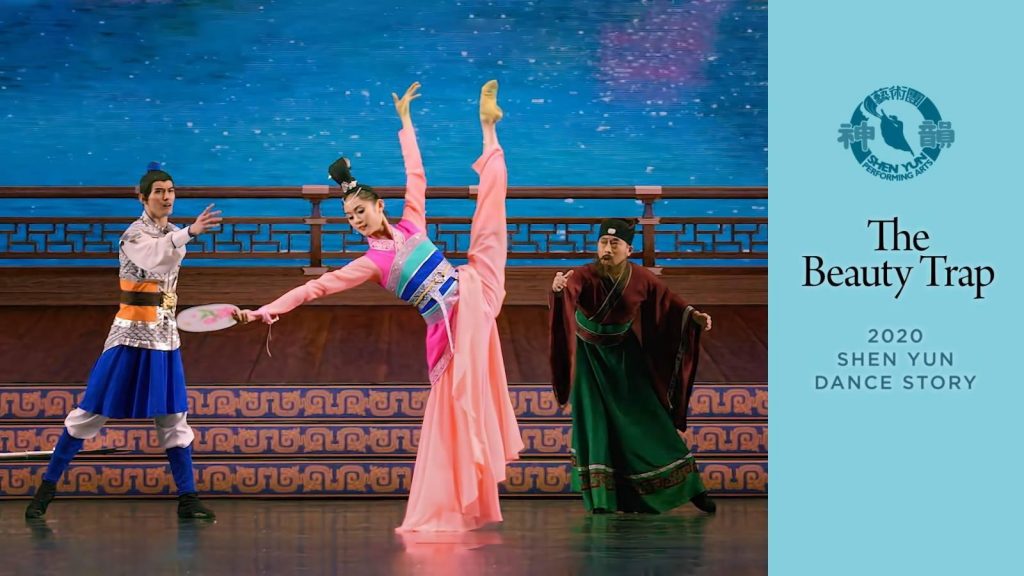
Shen Yun dance dramas such as The Beauty Stratagem and A Crimson Heart of Loyalty, together with the grace of classical Chinese dance, awakened in him profound reflections on the roots of Vietnam’s hát bội and tuồng theater, and on the currents of cultural exchange that flowed into them. Prof. Dr. Shine Toshihiko recounted: “The Đại Việt sử ký toàn thư (Complete Annals of Đại Việt) tells of Lý Nguyên Cát, who was captured in 1285, when the Mongol armies invaded Vietnam and were defeated. The Trần king and his court invited Lý Nguyên Cát, a man accomplished in song and performance, to become their teacher of dance and song. I see young people today practicing movements much like those Lý Nguyên Cát taught the children of the Trần nobility. Thanks to Lý Nguyên Cát and the wise kings of the Trần dynasty, Vietnam learned classical Chinese dance in a systematic way. Today, hát bội and tuồng are truly captivating, and this is a wonderful thing for Vietnam’s traditional arts.” The Professor also expressed his gratitude to China’s ancient civilization, and to Shen Yun Performing Arts for sharing classical dance drama — an art that has deeply influenced both the Japanese and the Vietnamese peoples.
The Professor’s profound reflections, so rich in cultural meaning, deeply inspired everyone in the hall and spread a sense of pride in the traditional culture of the Vietnamese people. Mr. Nguyễn Trung, speaking on behalf of the Organizing Committee, said: “To meet the Professor — a Japanese man with such a deep affection for Vietnam, who has devoted so much of his heart to preserving, restoring, and promoting Vietnam’s cultural heritage — truly moved me. We felt as though we had found a kindred spirit, a friend who truly understands us.”
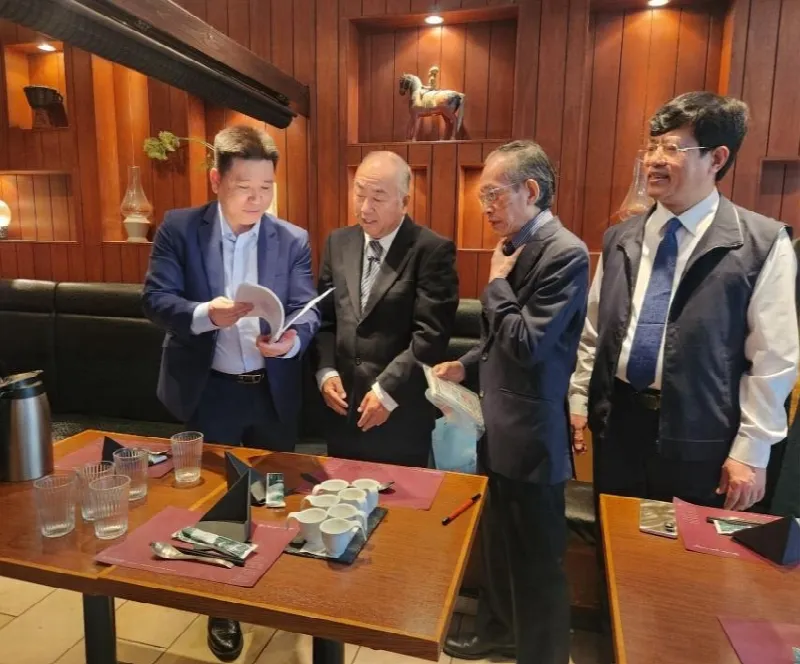
A warm and intimate gathering on the sidelines of the event. (Photo: VietMy Traditional Culture Co.)
Impressions of the Shen Yun Introductory Tea Party
The warm, heartfelt gathering and the elegant setting of the program left a deep impression on Prof. Dr. Shine Toshihiko. In a letter of thanks to the Organizing Committee after the tea party, he wrote: “It was a great joy and an honor to meet and talk with people who hold such a deep love for traditional culture and the arts. I was especially touched by your warm and thoughtful hospitality and by the sincere kindness you showed me. I would also like to give special thanks to the Organizing Committee for giving me the chance to meet Associate Professor Nguyễn Công Việt once again.”
In the heartfelt words of that letter, one can clearly sense both the kinship of a man once devoted to the performing arts and the profound respect of a cultural scholar for the values of traditional art. Watching footage of Shen Yun artists in training, Prof. Dr. Shine Toshihiko was deeply moved, for it stirred memories of his own youth. He had once studied and trained in musical theater at the Tokyo Academy of Stage Arts (Butai Geijutsu Gakuin), working through demanding exercises — above all the battement – the high lift and kick of the leg in dance. Later, while studying Vietnamese traditional martial arts in Huế, he again came to know training that demands strength, flexibility, and precision. And so, as he watched these young artists train with such perseverance, he understood all the more deeply the effort, the arduous practice, and the rigorous discipline that lie behind the fluid, refined beauty of every movement on stage.
Beyond the brilliance of the performers’ technique, Prof. Dr. Shine Toshihiko held in high regard the artistic depth and creative vision of each dance drama. He paid special tribute to the playwrights and stage designers for bringing history and legend to life in the language of modern theater. The pieces about Diao Chan (Điêu Thuyền) at the close of the Eastern Han dynasty and Yue Fei (Nhạc Phi) of the Southern Song left a lasting impression on him. Above all, the way these stories of historical and legendary figures were given hopeful, uplifting endings revealed a remarkable creativity in the art of storytelling on stage. With his love for classical Chinese art, he also expressed the hope of seeing more works drawn from the masterpieces of Song ci poetry (宋詞) and Yuan qu drama (元曲), opening new ways for the treasury of traditional art to live on in contemporary theater.
Through these reflections, Shen Yun is revealed not only in the beauty of its dance and stagecraft, but also in its tireless artistic labor, in its carrying forward of cultural values, and in its power to awaken the deepest emotions in the hearts of its audiences.
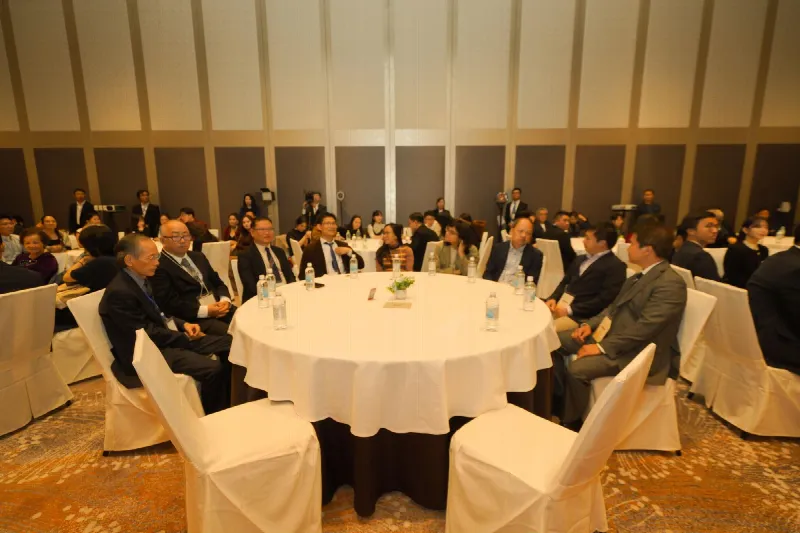
A full view of the program. (Photo: VietMy Traditional Culture Co.)
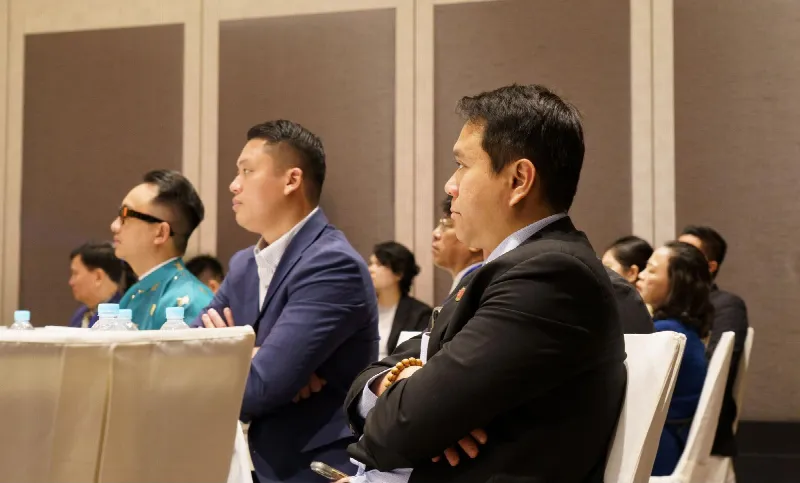
The audience listens attentively to the guest speakers. (Photo: VietMy Traditional Culture Co.)
A Lifelong Journey Alongside a Nation’s Culture
Prof. Dr. Shine Toshihiko is a Japanese researcher and scholar specializing in Vietnamese studies, Cham culture and history, and the ethnology of Southeast Asia. He has shared a long and close bond with Vietnam: he once taught Japanese at Huế University and studied Vietnamese traditional martial arts… His work ranges from the history, culture, and traditional music of the Cham people to the relationship between Ryūkyū and Vietnam. He holds especially dear those stories from history that reflect a friendship between the two peoples reaching back thousands of years, and has sought out historical evidence for accounts such as “the local rice of Yaeyama, in the southwest of the Ryūkyū Islands, is a red non-glutinous variety introduced from Annam,” “the connection between the tale of the marriage of Po Jini, a princess of Ryūkyū (Japan), and Po Kubaha, King of Champa (Vietnam)”, and “the letter from Emperor Lê Thánh Tông to the Ming Emperor Xianzong” (“On the Relationship between Ryūkyū and Vietnam through Historical Narratives,” Prof. Dr. Shine Toshihiko, Dong A University Journal of Science, Vol. 3, 2024).
Above all, Professor Shine Toshihiko has poured his heart into the study, comparison, and translation of the folk songs of the two countries, most notably in two anthologies: 12 Folk Songs of Vietnam and Japan (2023) and 30 Folk Songs of Vietnam and Japan (2026).
His anthology “30 Folk Songs of Vietnam and Japan: A Comparative Study and Translation” approaches folk song not merely as music, but in its ties to the language, history, geography, and spiritual life of the communities that gave it voice. The representative songs, chosen from region after region, mirror everyday life, customs and traditions, the bonds of family, and a love of homeland and country.
Overcoming the challenges of phonetics and tone, the work preserves the original melodies and captures the very essence of each people’s music. To achieve this, Professor Shine Toshihiko spent many years in painstaking study of renowned cultural figures of both nations: “I have sought to translate in the manner of Tản Đà — while also learning from the style of the poet Kaneko Misuzu (1903–1930, fourteen years younger than Tản Đà), whose works helped me greatly in teaching the rhythm and accent of Japanese — that is, to translate faithfully to the meaning, yet with freedom and an unfettered spirit.”
On his steadfast journey alongside a nation’s culture, Prof. Dr. Shine Toshihiko continues, quietly, to help preserve, study, and share the traditional cultural heritage of Vietnam. With a deep love for Vietnamese culture, the dedication of a scholar, and the devotion of a faithful friend, he has not only helped safeguard cultural treasures against the passage of time, but has also patiently built a bridge of Vietnam–Japan friendship rooted in the depths of history and culture. For beyond all his scholarly works, what endures is the harmony of kindred souls who cherish heritage and look toward lasting humanistic values — so that the friendship between the two peoples may continue to be nurtured and handed down from generation to generation.
VietMy Traditional Culture Co.